

Raising Happy Children Through Divorce
I love writing “our child”. It evokes warmth and love and a deep sense of joy when I see that phrase.
I, Rose Morsh, have written many articles on my experiences as a single parent for the past two decades.
My personal journey through the storm of separation and divorce.
I became a single mother when my child was 40 days old. Yes, you heard it correctly, when she was just less than 2 months old, I was on my own with a new born. It was one of the most heartbreaking experiences of my life.
There is this saying ‘divorce and bankruptcy are the two most heart-breaking experiences that a person can experience in life. Now imagine having to deal with your children's emotional well-being as we try to figure out how to co-parent and deal with our own mental health and finances. The feeling of terror and fear I felt at the beginning of my separation was agonizing. Having a background in psychology and child development did not help me in this process as I had never imagined having to live a life of a single parent or having to co-parent. Today, these skills and background have helped me connect with many parents. Using a holistic approach, I now help families emerge from the storm of emotions and find a balance in co-parenting or living as a single parent.
As a founder of a not-for-profit organization, Inventive Minds Child, Youth and Family Support Centre (www.inventivekidz.com), I have one objective -make sure we provide our community with the tools to thrive as parents and to foster a healthy environment for our children as we co-parent through the storm.
Take a breath. We’ll weather this storm together.
What is co-parenting?
Co-parenting is when two individuals decide to both parent their children following a separation or divorce. Co-parenting may come easily for some families, but not for all. The main objective is to have frequent contact with both parents which is usually associated with happier, healthier children. When divorcing spouses choose to co-parent, they must develop a co-parenting plan as part of the divorce process (see suggested parenting course below).
10 Signs of a Healthy, Effective Co-Parenting Relationship:
1-Have Clear Boundaries
2-Have a Predetermined Schedule
3-Willing to Be Flexible
4-Don’t have adult conversations in front of the children.
5-Don't Engage in Manipulation
6-Talk to One Another About Changes
7-Children Think You Get Along Well
8-Communicate Without Tension or raising your voice.
9-Recognize Each Parent's Purpose
10-Celebrate your child's birthday and your birthdays as individuals with your child.
How to reduce the negative impact of divorce on our children?
As parents, our main priority is caring for our children. It’s our first job. If we don’t get that right, our children will be exposed to an increased risk of mental health issues later on in life.
Research shows that during the early years, a child’s emotional brain is formed. It is important to understand that secure attachment can only take place when the child feels protected and safe with their primary caregivers.
A child’s home environment has to be built with empathy, kindness and positivity for a child to develop, otherwise, a child can develop misbehaviors and mental health issues starting from early years to teen.
You may already notice some of these symptoms in your children as you and your partner separate:
-chronic infant -difficulty sleeping -tantrum -clingy -difficulty socializing -misbehaviour -not following rules -lack of trust -anxiety. -depression
-feeling hopeless -finding the wrong group of friends to feel they belong to a family -staying in the bedroom not wishing to be involved with anyone
-too much involvement in social media -lower grades
To reduce the risk of your children experiencing these symptoms, you and your co-parent should:
- Get your feelings out somewhere else. Never vent about the other parent to your child.
- Stay child-focused. All contact should be focused on the child's needs.
- Never use kids as messengers. Co-parents rarely need to communicate more than once per day.
- Keep your issues to yourself.
- Set a business-like tone.
- Listen to your child. Spend time to talk with them about how they are feeling.
- Show restraint. There is no need to call/text the other parent multiple times a day.
How to best support your children through separation or divorce:
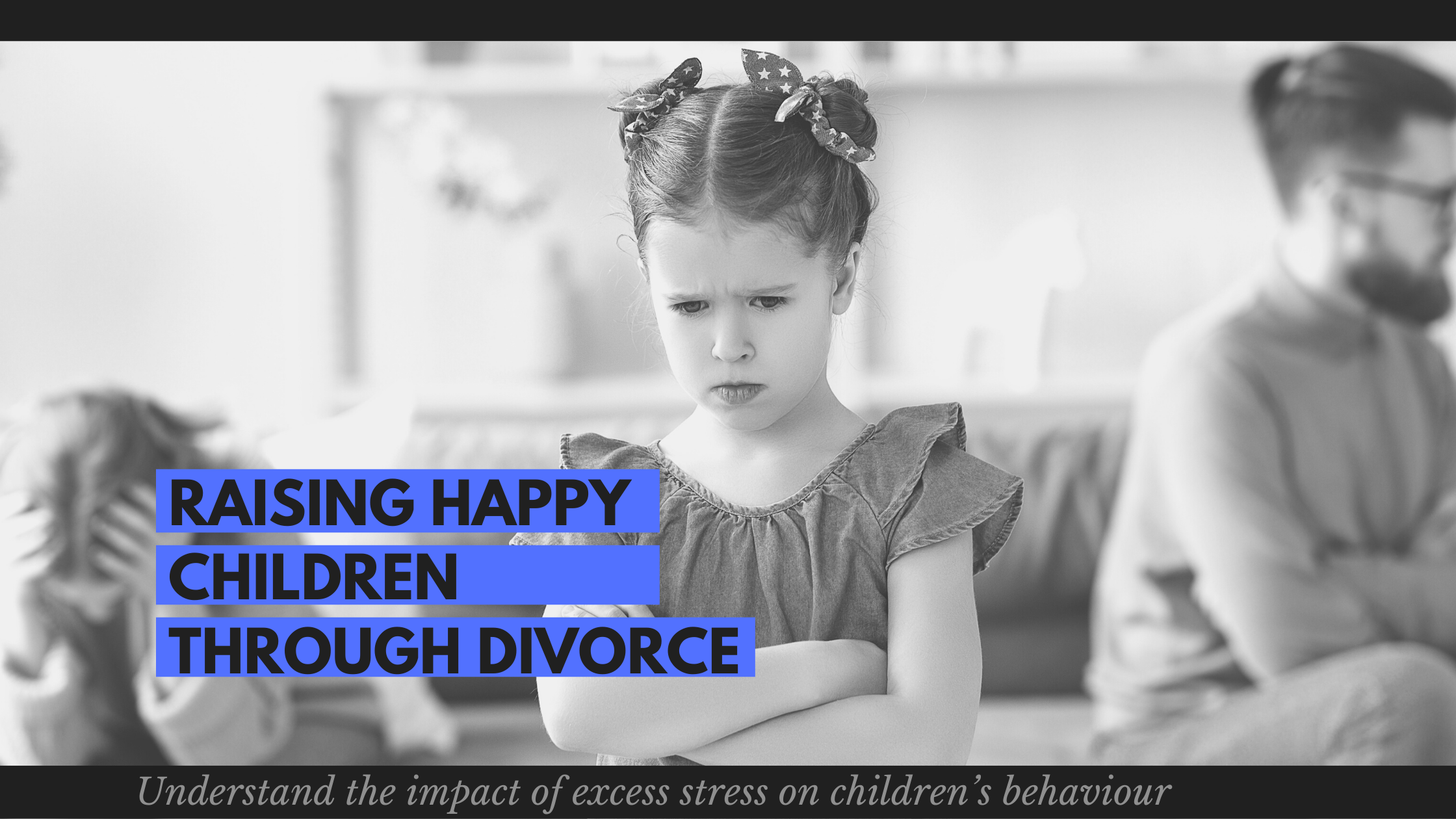
It is highly recommended if parents are going through a separation or divorce or choose to go bring a child into this world as a single parent, one should enroll in positive parenting courses to help them understand the impact of excess stress on children’s behaviour and mood and how your own stress your parenting.
Here are some courses to consider:
Triple P:
Positive Parenting Through Separation or Divorce
Positive Parenting Course: Managing difficult behaviour
Self-Reg:
Self Regulation: Parenting Course for Ages 0 - 6 years
Divorce and Separation:
Helping Children Cope With Trauma of Separation and Divorce with Dr Susan Hopkins
How Separation and Divorce Impacts Your Children & Parenting Style with Annette Kussin
How to Help Teens and Youth Deal With Divorce & Separation
These courses are designed to help you gain a whole new understanding of your child's and your own behaviour and how to respond to it. They are run online in a group format with additional one-on-one support. At Inventive Minds Child, Youth and Family Support Centre, we are here to help you with any of your parenting needs. If you wish to receive one-on-one counseling with a parent practitioner on skills how to co-parent please feel free to contact us directly so we can guide you towards the individual support you need: https://inventivekidz.com/page/parent-counselling
“Remember to always love and respect yourself. You will have a chance to find yourself again and find that new path.”
Additional Resources:
Pathway to Hope - Co-Parenting, Court Litigation & Children Aid Support
Written by Rose Morsh, Founder of the Inventive Minds Child, Youth and Family Support Centre

Speak With Our
FREE CONSULTATION